
1619 The Story
What Happened
-
In late August 1619, a ship called the White Lion landed at Point Comfort (near present-day Hampton, Virginia).
-
On board were about 20–30 Africans, taken from what is now Angola.
-
They had originally been captured by Portuguese traders, then seized at sea by English privateers (the White Lion and another ship, the Treasurer).
-
The Africans were traded to the English colonists for food and supplies.
Their Status
-
At first, the legal status of these Africans in Virginia was uncertain.
-
Some may have been treated as indentured servants, working for a set number of years before possible release.
-
But unlike white indentured servants, they faced harsher conditions, and laws soon shifted to ensure their enslavement for life.
-
Within decades, Virginia established laws that made slavery hereditary and permanent, turning Africans and their descendants into property.
Historical Significance
-
This marked the first documented arrival of enslaved Africans in English North America.
-
It began the system of racial slavery that would expand across the colonies and shape the economic, social, and political life of what became the United States.
The event is often seen as a foundational moment in U.S. history — the start of 246 years of slavery in America.
Their Background in Africa
-
The Africans brought to Virginia in 1619 came from the Kingdom of Ndongo, in present-day Angola.
-
Ndongo was a powerful African state but under heavy attack by the Portuguese, who were expanding their colonial rule in the region.
-
Many people were captured during wars and raids, then forced into the Atlantic slave trade.
How They Got to Virginia
-
Captured by the Portuguese
-
A large group of Angolans were taken prisoner and put aboard the Portuguese slave ship São João Bautista.
-
Their intended destination was New Spain (Mexico).
-
Intercepted by English Privateers
-
In the summer of 1619, two English ships, the White Lion and the Treasurer, attacked the São João Bautista in the Gulf of Mexico.
-
They seized about 50–60 Africans from the Portuguese ship.
-
-
Arrival in Virginia
-
The White Lion sailed to Point Comfort (Virginia) in late August 1619.
-
About 20–30 Africans were exchanged for food and supplies with the struggling English colonists.
-
A few days later, the Treasurer also arrived, likely bringing a smaller group, but it quickly left to avoid Spanish reprisals.
-
Who They Were
-
Historians believe many of them belonged to the Ndongo people, speaking Kimbundu, and practicing African traditions mixed with Catholic influences introduced by the Portuguese.
-
They were skilled farmers, artisans, and warriors, not just “labor” — which meant they contributed knowledge and skills that shaped colonial Virginia’s survival.
Why It Matters
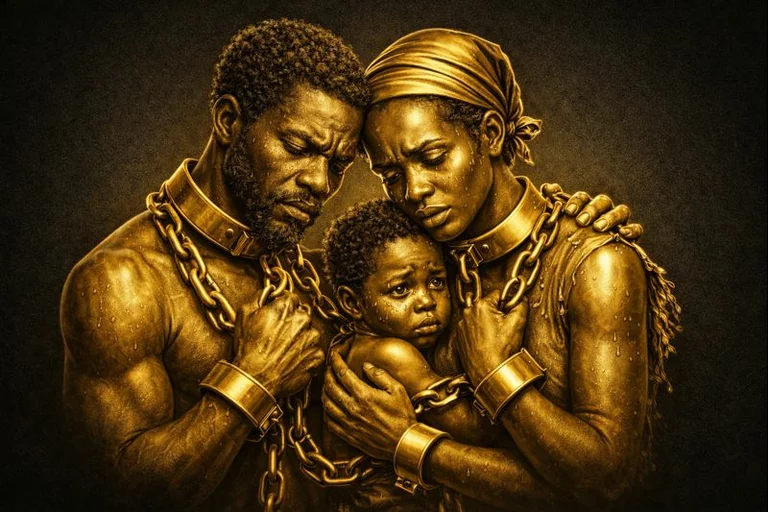
- This moment marked the first recorded presence of Africans in English North America.
-
Many worked on tobacco plantations, the crop that sustained Virginia’s economy.
-
Unlike later generations, some early Africans managed to gain freedom after service and even owned land.
-
Example: Anthony Johnson, an African man who arrived in Virginia (possibly in 1621), earned his freedom and became a landowner on the Eastern Shore.
-
But by the late 1600s, such opportunities disappeared as Virginia solidified race-based chattel slavery.
-
In 1619–1620s, Virginia did not yet have formal slave laws. Africans were sometimes treated like indentured servants, meaning they might work for a set period.
-
However, over the next decades, laws hardened:
-
By the 1640s–1660s, Africans and their children were increasingly enslaved for life.
-
By 1662, Virginia passed a law making slavery hereditary, based on the status of the mother.
-
-
-
-
-
“Antoney” (or Anthony) and Isabella
-
A married couple, originally from Ndongo.
-
Enslaved at Captain William Tucker’s plantation in Hampton.
-
In 1624, Isabella gave birth to William Tucker, the first documented child of African descent born in English North America.
-
-
Angela (sometimes “Angelo”)
-
A woman from Ndongo, brought on the Treasurer.
-
She was placed in the household of Captain William Peirce in Jamestown.
-
-
-
-
-
-
She appears in the 1625 Muster of the Inhabitants of Virginia, one of the earliest surviving censuses.It also signaled the beginning of a transformation in Virginia’s labor system, from reliance on indentured servitude (both African and European) toward race-based chattel slavery.
Early Individuals We Know
Historians have identified a few by name in surviving documents:
-
“Antoney” (or Anthony) and Isabella
-
A married couple, originally from Ndongo.
-
Enslaved at Captain William Tucker’s plantation in Hampton.
-
In 1624, Isabella gave birth to William Tucker, the first documented child of African descent born in English North America.
-
-
Angela (sometimes “Angelo”)
-
A woman from Ndongo, brought on the Treasurer.
-
She was placed in the household of Captain William Peirce in Jamestown.
-
She appears in the 1625 Muster of the Inhabitants of Virginia, one of the earliest surviving censuses.
-
Their Legal Status
- In 1619–1620s, Virginia did not yet have formal slave laws. Africans were sometimes treated like indentured servants, meaning they might work for a set period.
- However, over the next decades, laws hardened:
- By the 1640s–1660s, Africans and their children were increasingly enslaved for life.
- By 1662, Virginia passed a law making slavery hereditary, based on the status of the mother.
Their Lives in Virginia
-
Many worked on tobacco plantations, the crop that sustained Virginia’s economy.
-
Unlike later generations, some early Africans managed to gain freedom after service and even owned land.
-
Example: Anthony Johnson, an African man who arrived in Virginia (possibly in 1621), earned his freedom and became a landowner on the Eastern Shore.
-
But by the late 1600s, such opportunities disappeared as Virginia solidified race-based chattel slavery.
Historical Legacy
-
The Ndongo captives of 1619 represent the first chapter of African American history.
-
They and their descendants lived at the crossroads of contradiction:
-
A colony experimenting with representative democracy (House of Burgesses, also founded in 1619).
-
A society simultaneously building slavery as its economic foundation.